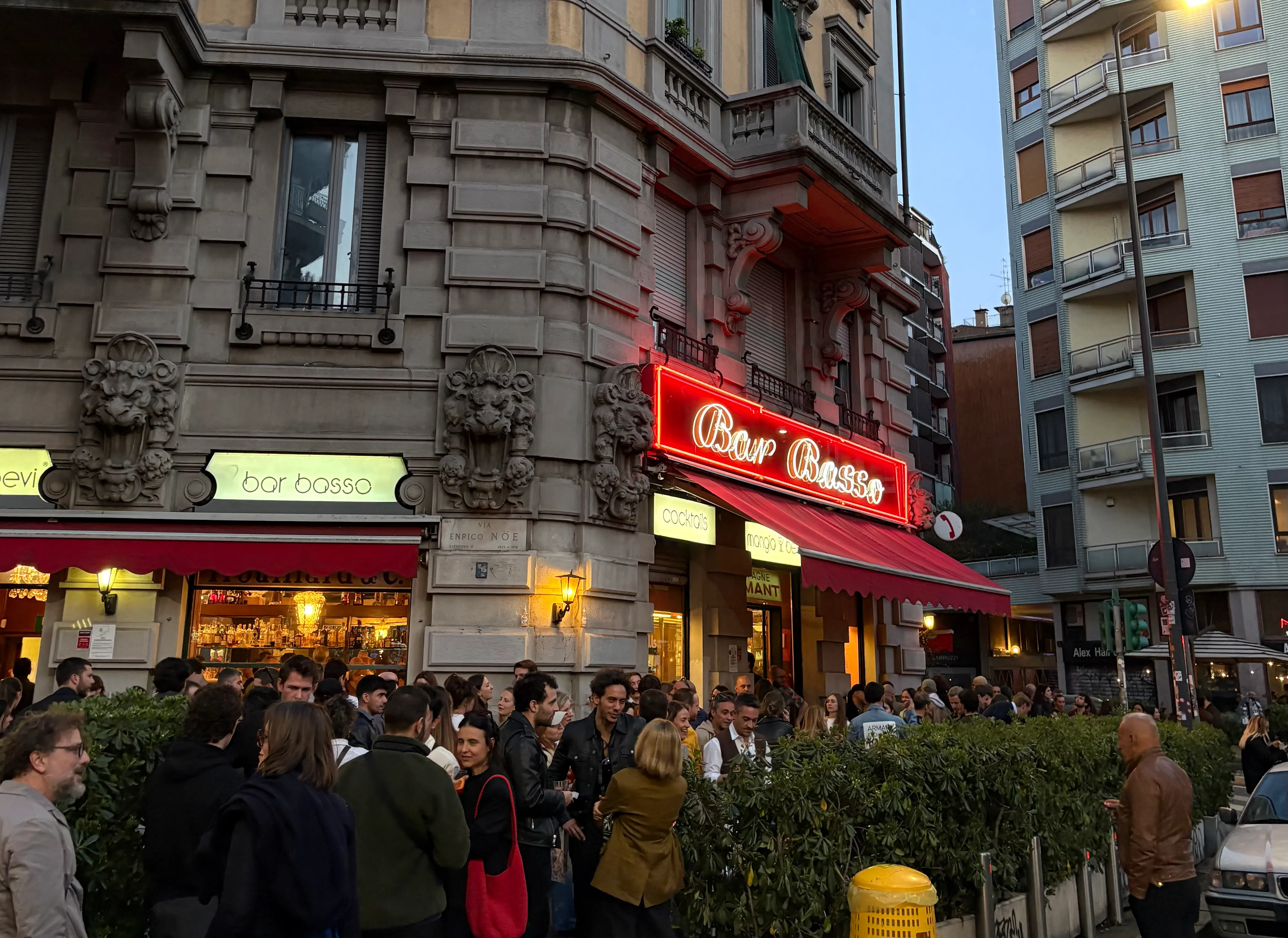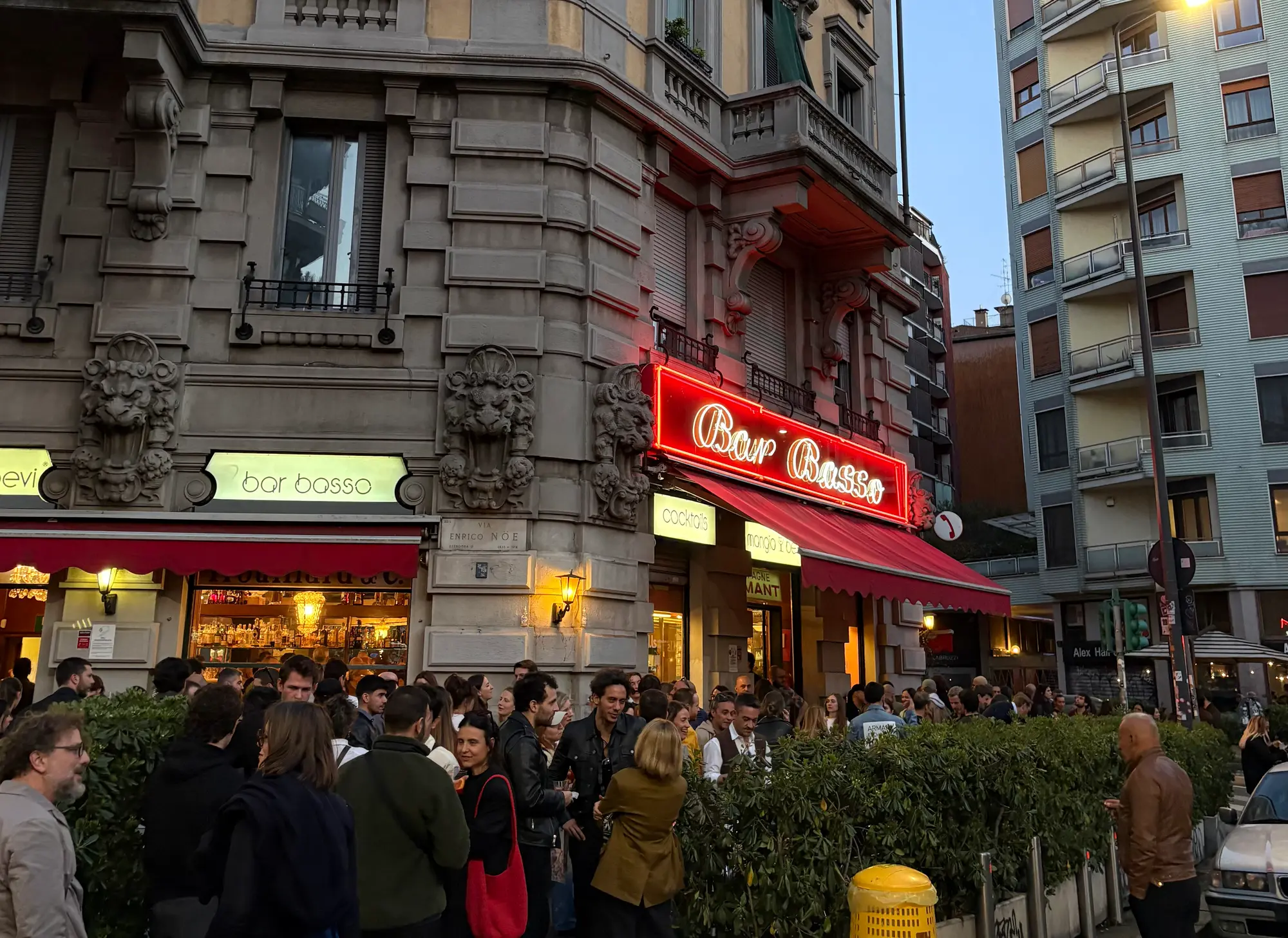
We were on the ground at Milan Design Week when we bumped into Bar Basso owner Maurizio Stocchetto and his wife Pia Bianchi at the Jil Sander Press Preview. A day later, we were sitting down with Maurizio at Bar Basso in Porta Venezia over Negronis, olives, and antipasti. Bar Basso has been an epicenter of Milan's design and fashion world since the 1960s - and during Salone, it feels like the entire industry passes through at some point. After a long day of events, everyone ends up here: Negroni Sbagliatos, oversized Aperols, cigarettes on the pavement. Maurizio told us how Bar Basso became one of the most natural networking spots for people from design, fashion, and art - and how he protects its tradition while big brands want a piece of it.
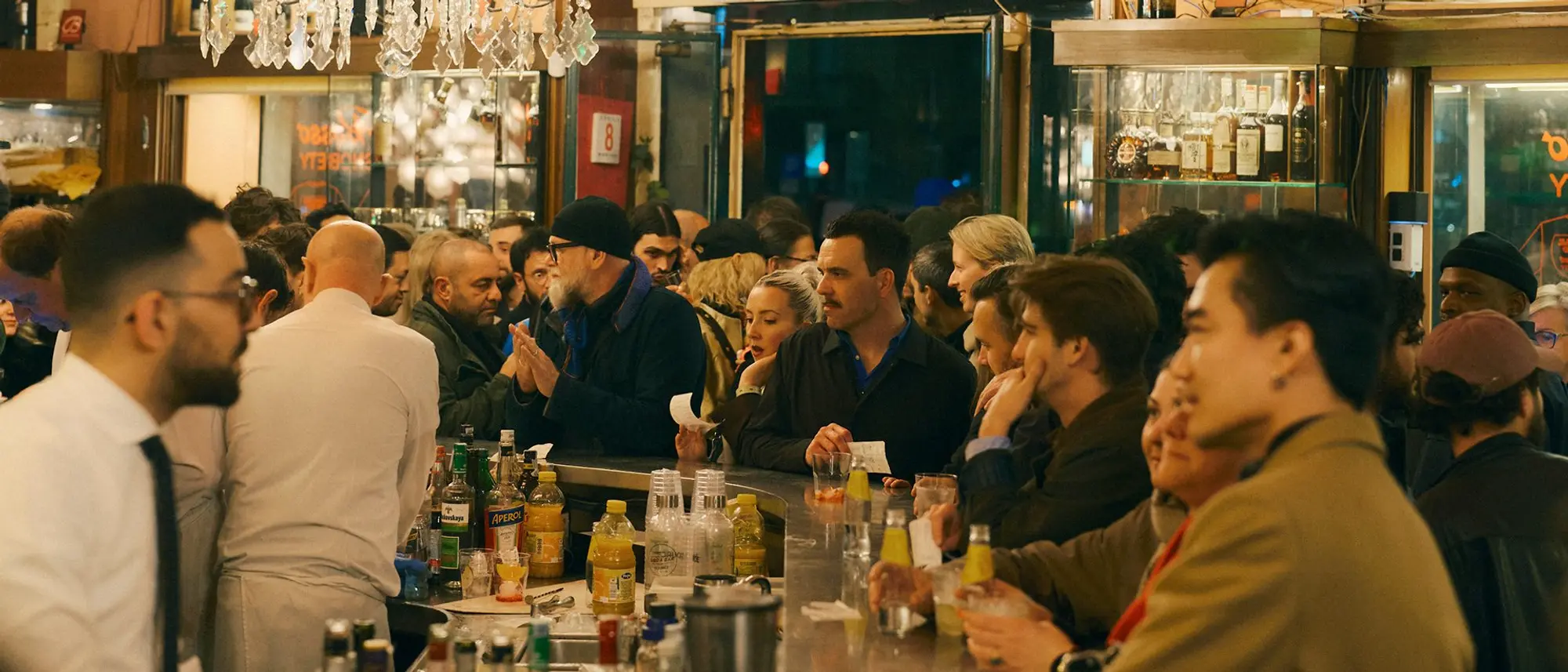
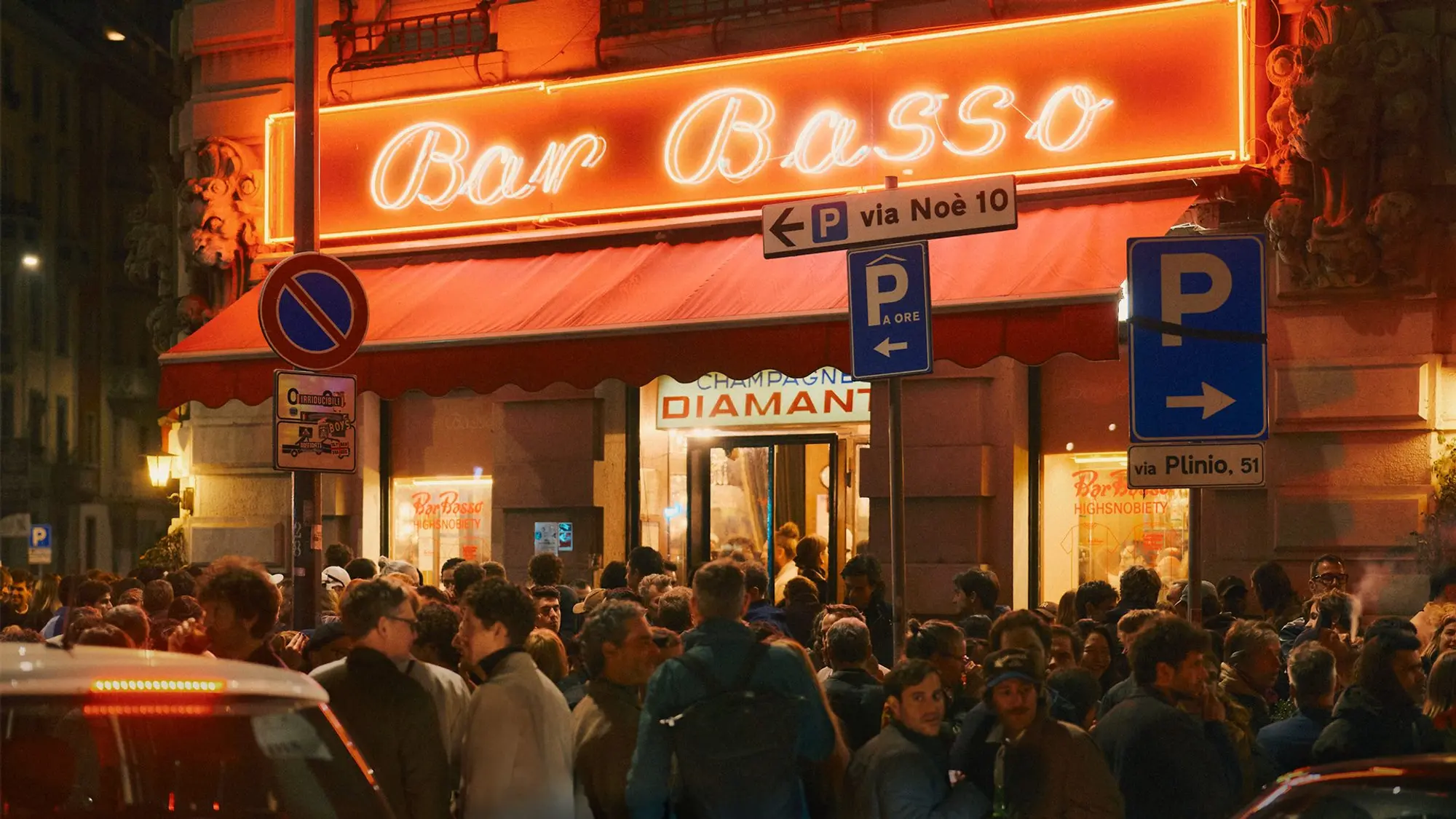
Bar Basso during Milan Fashion Week. ©Andrea Pugiotto
Thank you for having us. Bar Basso has become an institution during Milan Design Week, fashion week and art week, basically for the whole industry. Was that something that just happened, or was there a plan behind it?
The place was established in the 1930s. My father took it over in 1967. We were living in the mountains, in the Dolomites, I came here when I was seven. The former owner, Mr. Basso, had done a good job, but he was getting old and his son wasn't interested in taking over. Through the grapevine, my father heard about the place and got in touch. They liked each other, and so the deal was made.
A professional network that feels personal and curated. Apply to become a member of NeueHaus.
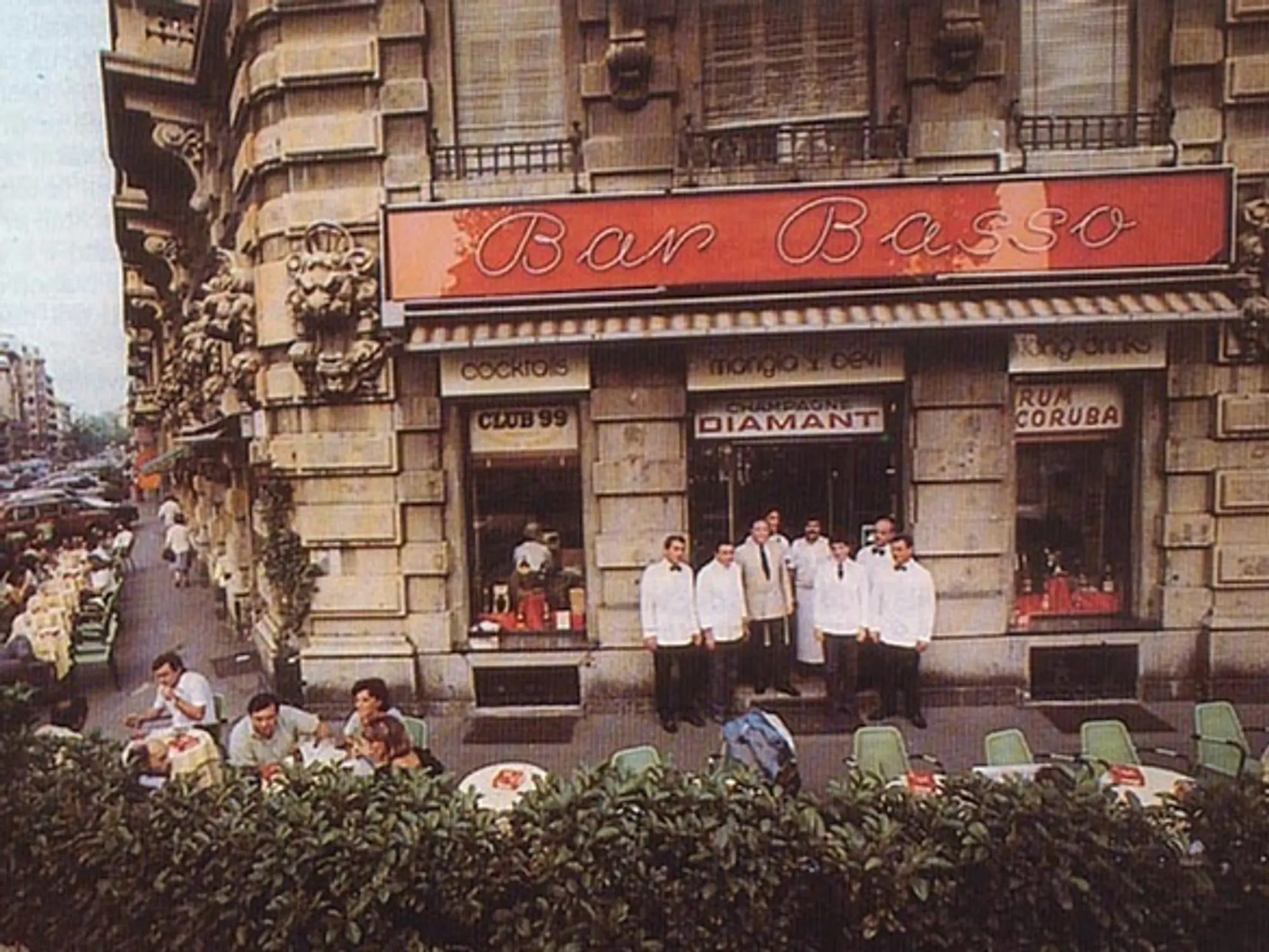
Before Milano, my father had spent twenty years in Cortina d'Ampezzo, the ski resort, where he'd learned to make cocktails professionally. Cortina in those days was very hot - Hollywood people, Italian writers, actors, painters. Very cosmopolitan. When he came to Milano, it was a different world: more of an industrial city, a working man's town. Cocktails weren't well-known here. After World War II, the Americans had brought cocktail culture to Italy - to Rome, Florence, Venice, but Milano was a little off that map. So my father arrived with the idea of recreating the atmosphere of a great hotel bar, but on a street corner.
So you basically grew up at Bar Basso?
I started in the eighties, still in high school, just old enough to handle alcohol legally. I had a little motorcycle and needed gas money. But then I started to like it. Before university, I wanted to do my military service, except as a boomer there were too many people on the draft and they told me to come back a year later. So I went to California for a year, the Bay Area, San Francisco. When I came back, Milano had changed.
There were fashion people I'd never seen before, and then there were these guys all dressed in black, carrying black briefcases.
Industrial designers. I befriended one of them, James Irvine, from London, who was working for Ettore Sottsass. We started exchanging jazz records and became friends. He had other English friends, they started coming to the bar, we were going to concerts. And among that group were Jasper Morrison and Marc Newson. The more famous they became, the more people gathered around, photographers, other designers, manufacturers. That whole little world kept growing. It was really the very beginning of Milano Design Week. And the great thing about those days was there was no expectation. Just lots of smart people, and real, real good fun.
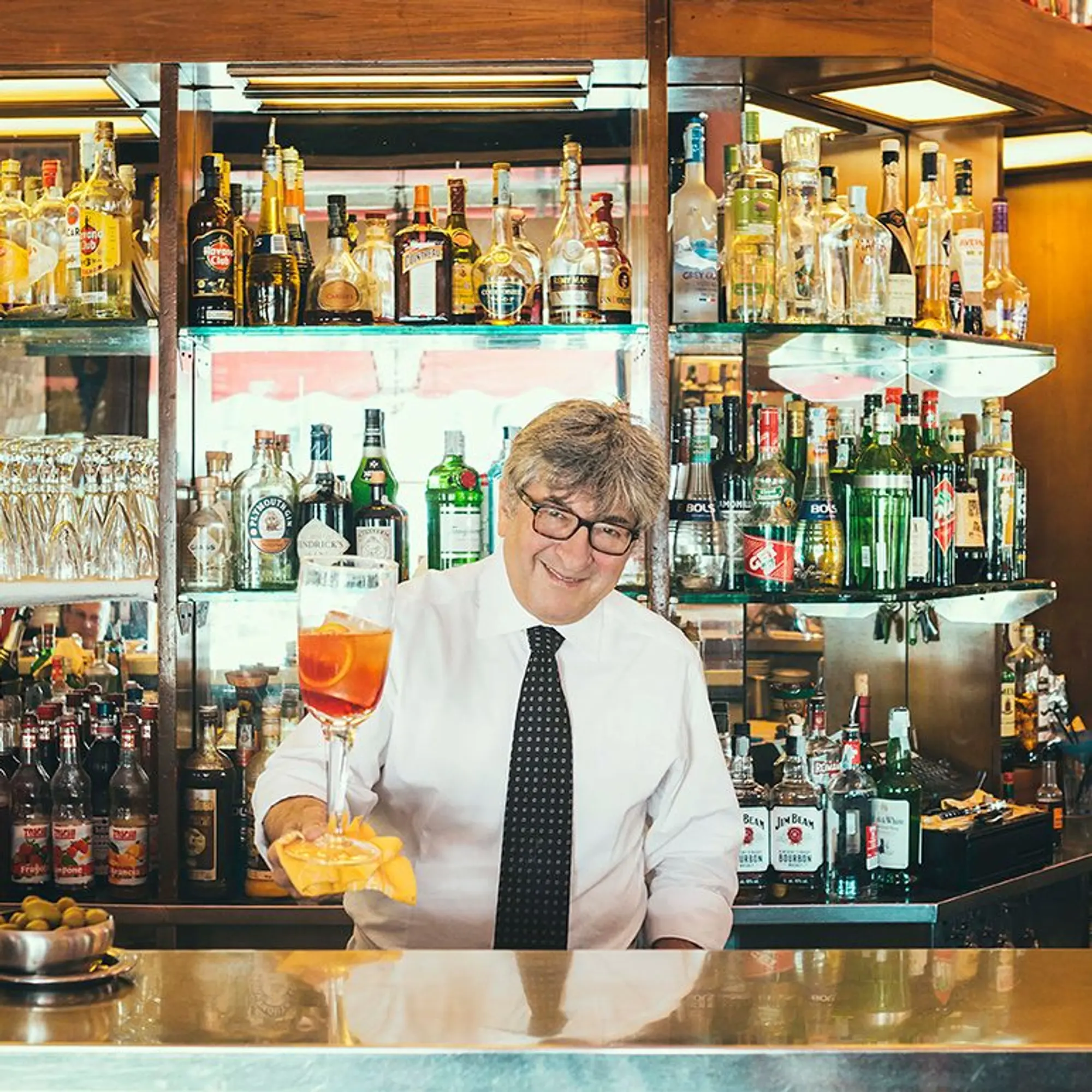
Maurizio Stocchetto at Bar Basso, holding their iconic Negroni.
Brands have wanted to collaborate with Bar Basso for decades. How do you protect the personality of a place when everyone wants a piece of it?
It's a very nice idea to embrace a larger community, but at the same time you have to be careful about keeping a sort of integrity. This is not rocket science, we are basically serving drinks. Salone del Mobile has almost blown up in our face, it has become almost unstoppable. Beautiful brands come in, but maybe they are not really very much into design. So we try to give credit to people who we know cared about making design that could make people's lives more enjoyable, more comfortable. And I don't have the tools to be too strict about it, I'm not a designer, I'm not an architect. But we try to give room to the same spirit that was here from the start. We've been lucky, honestly.It has never really been a problem.
Is there one item in the bar that is very special or personal to you, that carries a certain kind of story?
This furniture comes from the mid to late forties. Some pieces are original from when my father took over, some were remade in the early seventies. Some chairs are from the fifties, some from the seventies maybe. It can be a little tacky, it's not elegant, but somehow it fits, and it's a warm place to be. Different layers of different styles. You can't touch anything because on the whole it makes sense. And we've never had to renovate. That, to me, is fantastic.
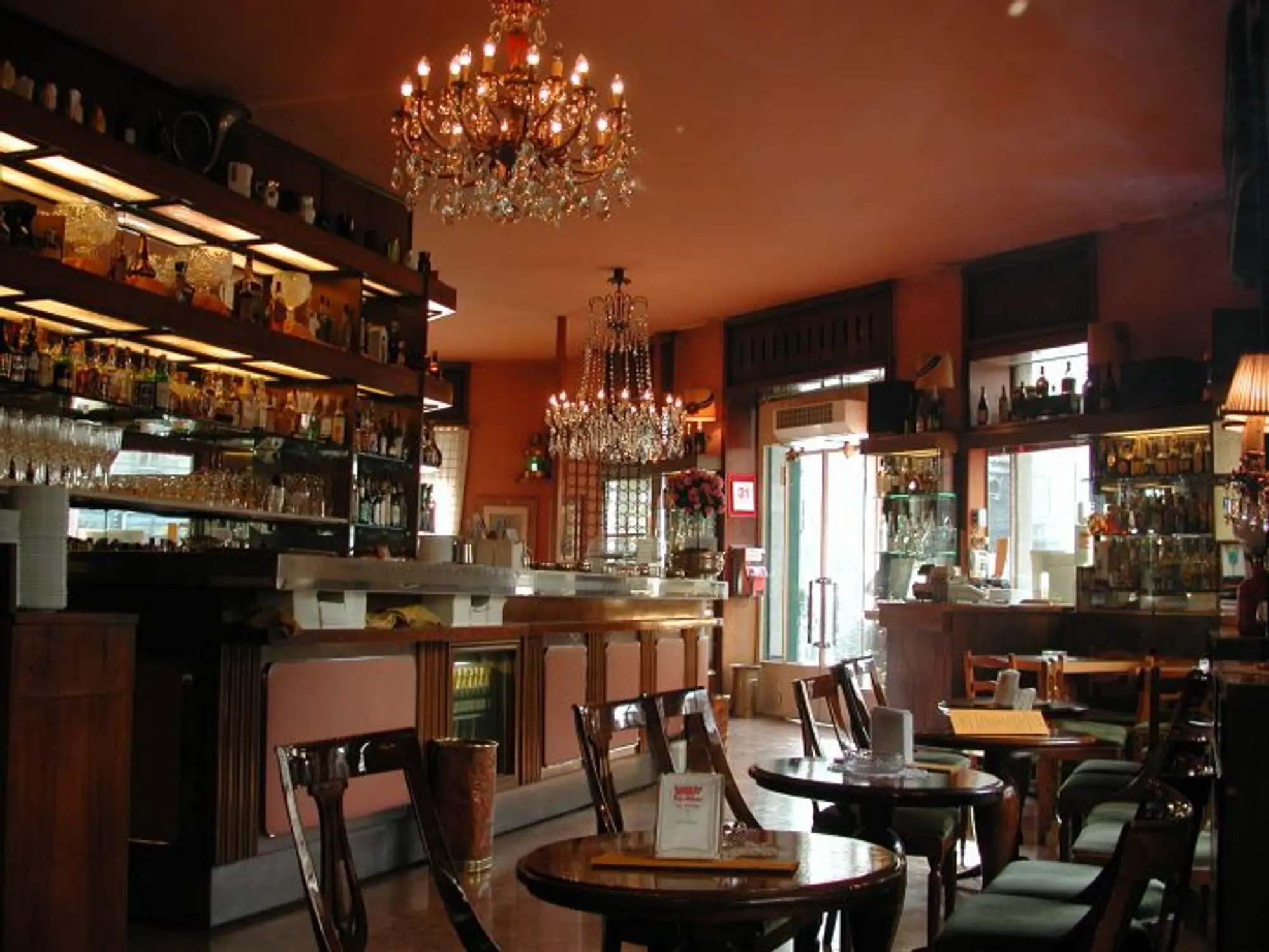
Bar Basso's Interior.
Is there one specific object?
There used to be one thing I loved that we don't have anymore, a jukebox. The music box was in the basement, but we had three little selectors at the bar. You could dial a number, A4 for the Rolling Stones, Satisfaction, and the message went down to the basement and you heard the song. The funny thing was: when the bar went quiet and someone put a coin in the machine, everybody looked at him, waiting to hear what he'd chosen. It was a kind of challenge. Lots of fun..
How do you think Bar Basso is going to look in ten years, will it change, will it stay the same?
I don't think so, we stay the same. But I honestly have no clue. It's such a complicated world now, we try to hold on to what we have. I've been very fortunate. It's a beautiful world, lots of bright people designing the best things we use in everyday life. And in the eighties, Italian companies were investing a lot of money, making a mold for a sofa that cost a fortune, not knowing if it would be a good idea or a bad idea, but they gambled. And most of them got successful. The Italian companies were very generous in opening their doors to designers with good ideas from all over the world. That's what made Salone del Mobile such a special institution, one that's very hard to replicate elsewhere, because you have the Brianza, the local area where furniture is made with very skilled carpenters, and then all the fashion influence on top of that. Such a set of circumstances that is very hard to recreate.
Milano is not as beautiful as Rome or Florence, but I think there was a very gifted bourgeois world, the manufacturers, who found a way to embrace larger communities. And that's a kind of miracle. The city is not ugly, but it's not perhaps the most beautiful place in the world. It's just a nice place to live. If you're used to living in Milano, you don't move out easily. You have access to the north of Europe, to a larger world. And Bar Basso, in its own small way, was part of all that.