How Two Designers Make Apple Rethink What a Phone Should Be
In an age where everything demands our attention, two designers decided to give some of it back. With The Light Phone, Kai and Joe built a device that doesn’t compete for your time, it protects it. A quiet rebellion against the attention economy, designed for those who choose less noise.
When “More Engagement” Felt Wrong
What brought you to founding The Light Phone?
Kai: My background is in product design, I worked on smartphones for Motorola, Nokia, and Blackberry. Joe comes from graphic design. In 2014, we both joined Google’s incubator for designers. The idea was that design should be at the center of how we create products.
But when we talked to investors and entrepreneurs, everyone bragged about the same thing: “My users spend five hours a day in my app, that’s why we’re successful.” The more time, the more data, the more money.
Meanwhile, look around: subways, restaurants, airports. Families of four, everyone staring at their screens, no eye contact. We all hate it, but can’t get away. There’s this tension between how humans actually use smartphones and how business models push us to use them more. We thought, it doesn’t have to be that way.
Joe: The program encouraged us to make another app with high retention. But when we talked to people, everyone said they wanted to throw their smartphone away and live in a cabin. That told us something. What people wanted wasn’t more apps, they wanted less.
What Happens When You Unplug for a Weekend
How did the idea of testing disconnection come about?
Joe: We started giving people flip phones for an evening or a weekend. Just some carved-out time where you’re not hyper-connected but still reachable. Almost everyone said it was the most refreshing weekend they’d had in months.
But here’s what we learned: no one really used the phone. The value was in not using it. That was the insight - the experience of going light.
That’s how the first Light Phone was born. We went to Kickstarter because no investor believed people would pay to use their phone less. But people from more than eighty countries supported the idea. It proved there was a community out there that wanted something different.
Tech That Knows Its Place
How do you reconcile good intentions with being commercially successful? Technology is incredibly addictive.
Kai: We’re not trying to go backwards. We’re not anti-technology. We just think it should serve us, not the other way around.
It’s simple. You use your hammer, hammer the nail, and put it away. You don’t think about it again that day. That’s how Light Phone should feel - a tool, not a portal.
A lot of our users keep both phones. A smartphone for work, a Light Phone for when they want to relax. Right tool for the right time. We have different shoes, different cars, why only one kind of phone?
Joe: Our business model supports that logic. We charge upfront. We’re not interested in how much time you spend on it. In fact, the goal is that you don’t. Our revenue isn’t tied to your attention, and that’s the whole point.
Marketing That Tells You Not to Buy
Your "Don't Buy This Phone" campaign is brilliant. How did you approach marketing with limited resources?
Joe: That one actually started as a funny reaction. We had this graph we made forever ago where Light is going one way, and every other tech company - Amazon, Apple, Twitter, Google - was going in the complete opposite direction. So I kind of joked that they were the alliance of big tech, the antithesis of what we’re doing.
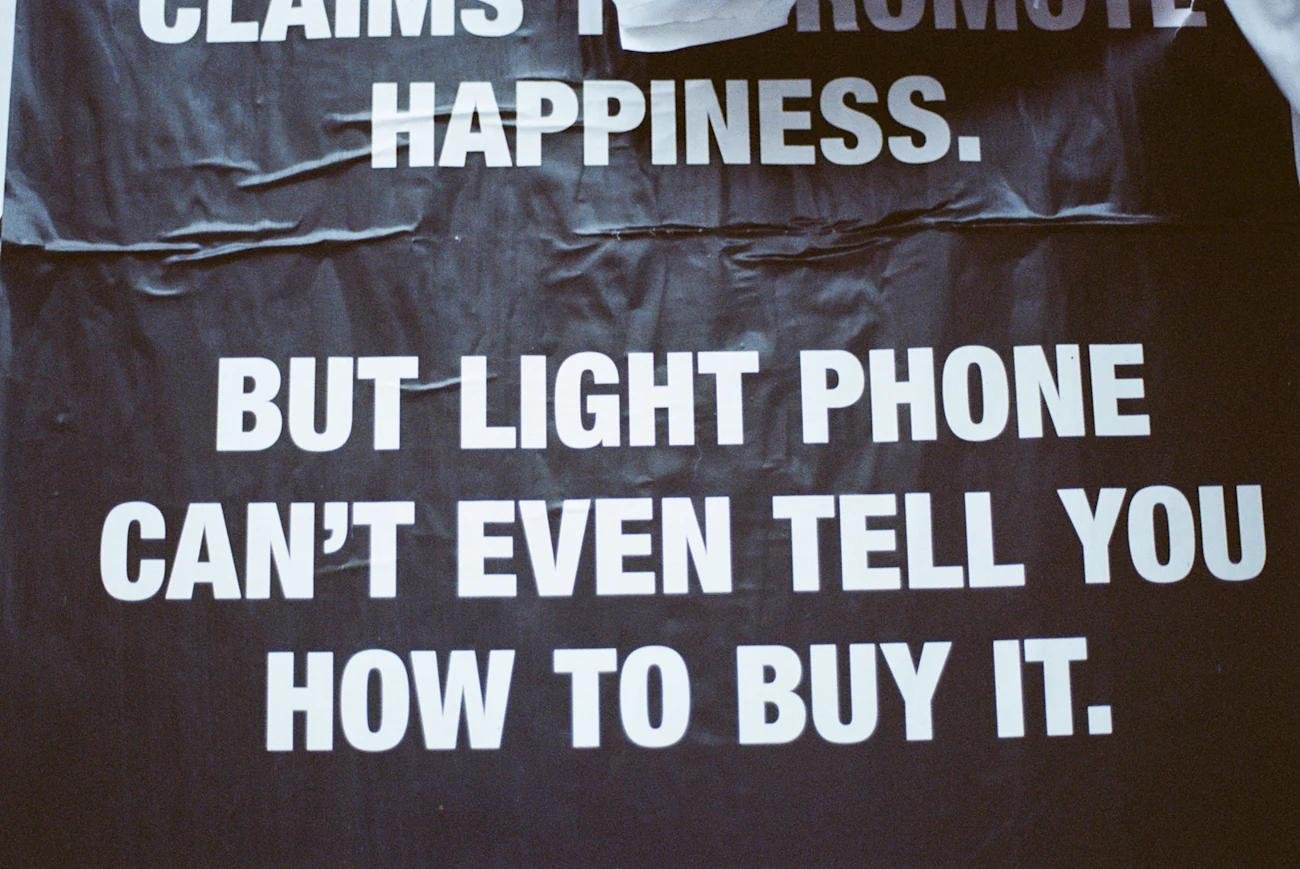
We didn’t have a real budget, so we had to do things that could be shared digitally and could travel on their own. That’s how “Don't Buy This Phone” came about. It wasn’t about selling - it was about making a point. One of my favorite lines was: “The Light Phone claims to promote happiness, but it can’t tell you how to buy it.” Because, obviously, you can’t actually buy happiness.
For us, it’s about the value of your time. People start to connect the dots themselves. It’s not on-the-nose like “our phone has 5G and Bluetooth.” We just want someone to see one of our ads and maybe question their phone habits, even before thinking about the Light Phone. Maybe they don’t buy it. Maybe they delete some apps. Either way, the reflection is the first step.
Dear Tim Cook, We Agree With You (Mostly)
Tell us about the Dear Tim Cook campaign.
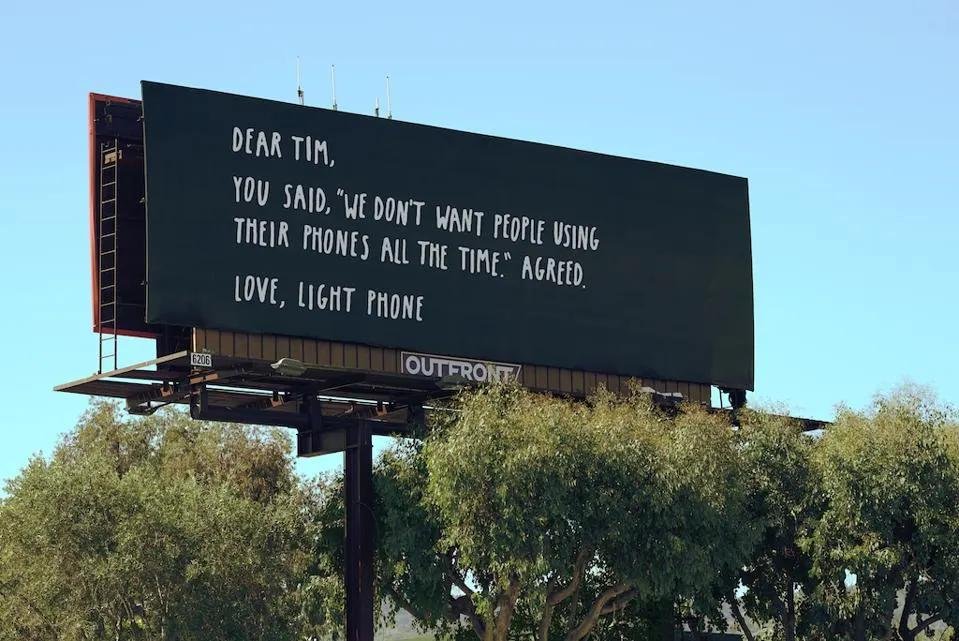
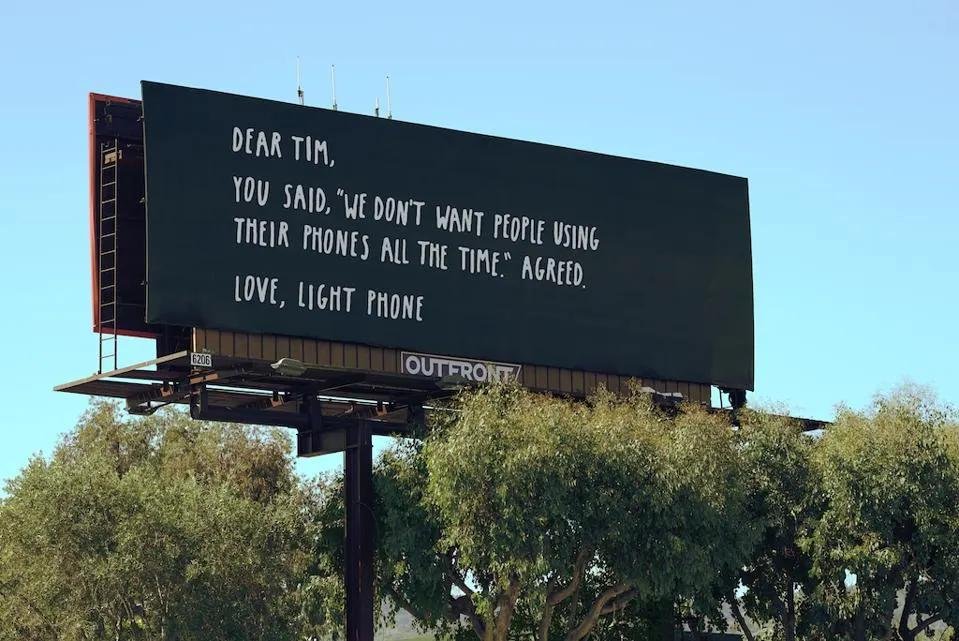
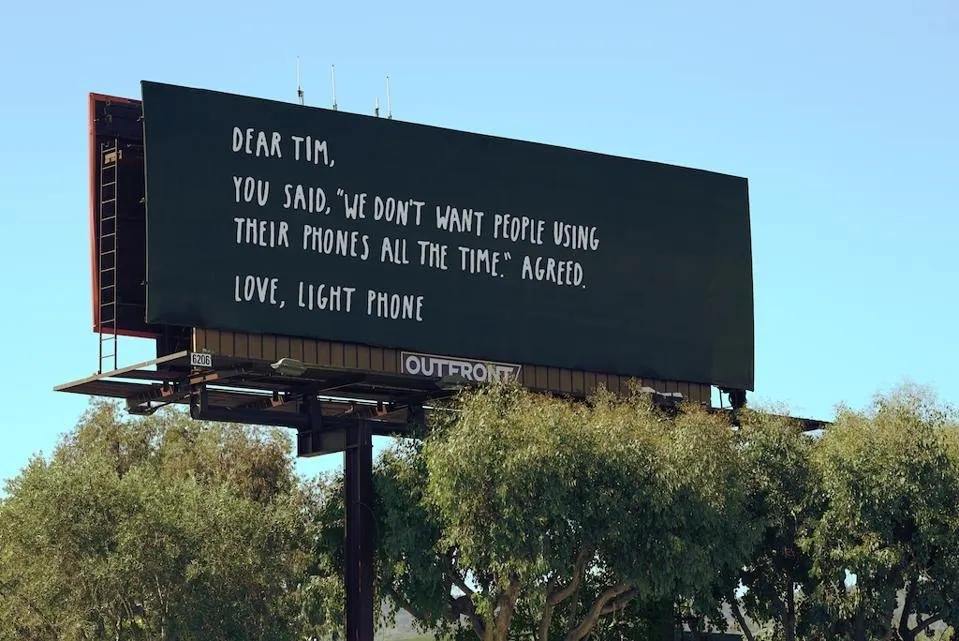
Joe: When we were launching the phone, we couldn’t advertise to a quadrillion people, so we thought, if we’re going to advertise to one person, why not pick Apple’s CEO? We did it almost like love notes to him, because he’s basically saying the same thing we’re saying: if you spend this many hours on your phone, you’re doing it wrong.
He’s out there saying things like “people shouldn’t spend this much time on their smartphones” and “you should spend more time with your family.” We completely agreed. So we put his quotes up around Apple’s campus and on some street signs in Brooklyn. It was cheeky, it got picked up in the press, and it didn’t cost much. That was the point: we wanted to create a network effect with minimal resources.
It was also a way to highlight the irony. So many tech CEOs shield their kids from the very things they’re promoting to everyone else. You shouldn’t spend that much time on your phone, but we’ve done nothing to make phones less addictive. That tension is exactly what we wanted to make visible.
How to Find Investors for a Product That Isn’t Meant to Be Used
How did you find investors willing to back a company that goes against the attention economy?
Kai: When we first pitched Light Phone in the Google program, most investors weren’t willing to commit to the idea that people might want to use their phone less. Kai and I made a video explaining our vision, and people from more than eighty countries pledged to our first Kickstarter. That helped us prove there was a community that actually wanted something different.
Joe: We now have 85 investors - VCs, celebrities, smaller funds - but it takes time to find the right ones whose mission aligns with yours. Many will suggest you just do social media promotion or chase conventional growth, but that wasn’t something we wanted to focus on. The value today, especially in tech, comes from what you choose not to do, and from creating something people resonate with. Finding investors who believe in that vision isn’t instant, but it’s possible.

Designing for Less, Not More
Are you planning to expand into other products?
Kai: The phone was just the first step. We want to design other “light” products, simple tools that do one thing well. A good speaker, a focused camera.
Joe: Since switching, I started to compartmentalise everything. I have a work laptop and a personal art computer. No emails when I’m not working. Separating things makes life clearer.
Maybe that’s where design is heading, not towards more features, but towards better balance.